
Torus Controls
For a retro computing VPN mesh, the biggest risks come from untrusted nodes, weak endpoints, and broad network exposure. We're not talking about the VPN protocol being hacked; we're interested in your homelab and retro equipment being compromised.
Mesh and topology risks
- Every node on the platform is a potential target; a compromised member system could be used to jump laterally across the mesh. Never share your Torus login credentials with someone else.
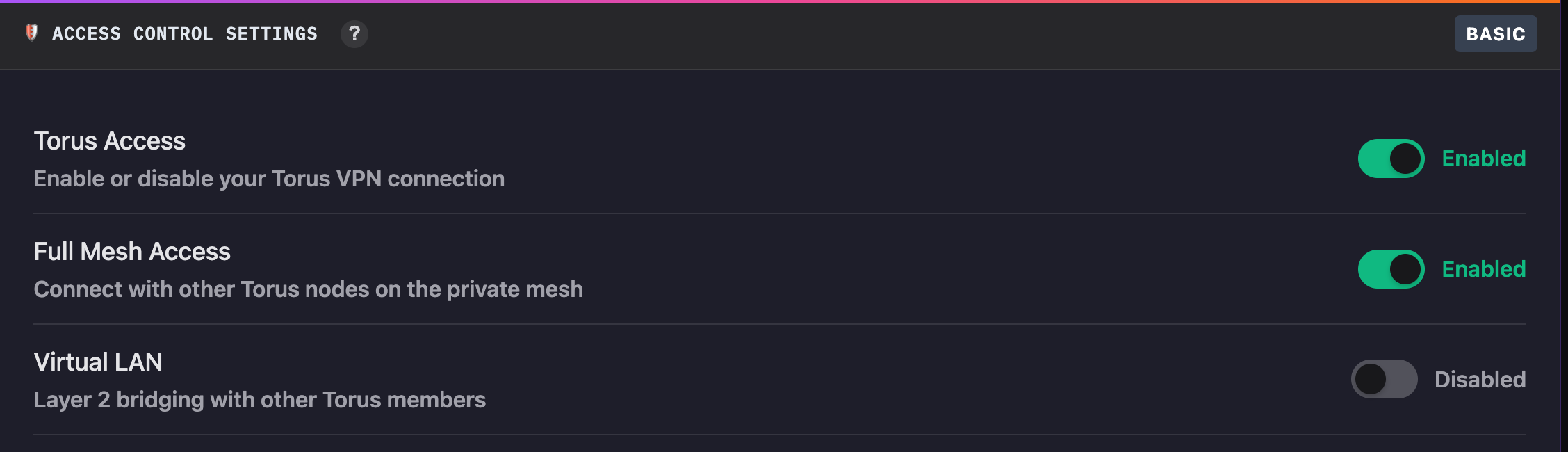
The Torus provides tools in the user control panel to enforce segmentation and access controls. The screenshot here shows a few of the controls to permit or deny access to your tunnel endpoint.
Retro system–specific risks
-
Legacy operating systems often lack modern hardening, making them easy to exploit once reachable over a network. There isn't much you can do about this except permit only the access you need. The torus is designed to be open by default and accessible to all users. Using a firewall on your WireGuard tunnel to protect your homelab/equipment is highly recommended.
-
Old protocols and services (SMB, Telnet, FTP, unauthenticated web UIs, etc.) may run with weak or no encryption and even default well-known credentials. Tighten up your systems! Back in the day trust was almost implied, and a lot of bad practice was commonplace.
Endpoint and malware risks
- The torus is built for the sharing of networked systems, and there is no prejudice against modern systems. Where possible, ensure your endpoints are running the latest updates, have antivirus and anti-malware software installed, and follow best practices as if they were on the same LAN.